In Search of Sumac
There are hundreds of different types of Sumac (Rhus spp.) growing all over the world. Sumac produces aromatic sour fruit that can be used to flavour just about anything. I have it on good authority it's one of the vague “herbs and spices” in Arnott's Pizza Shapes! The sumac berries are actually tiny drupes [stone fruits], packed together in a cluster.

We even have a native Australian Sumac, Rhus taitensis, that grows in northern Queensland. This doesn't taste especially good, but has medicinal value.

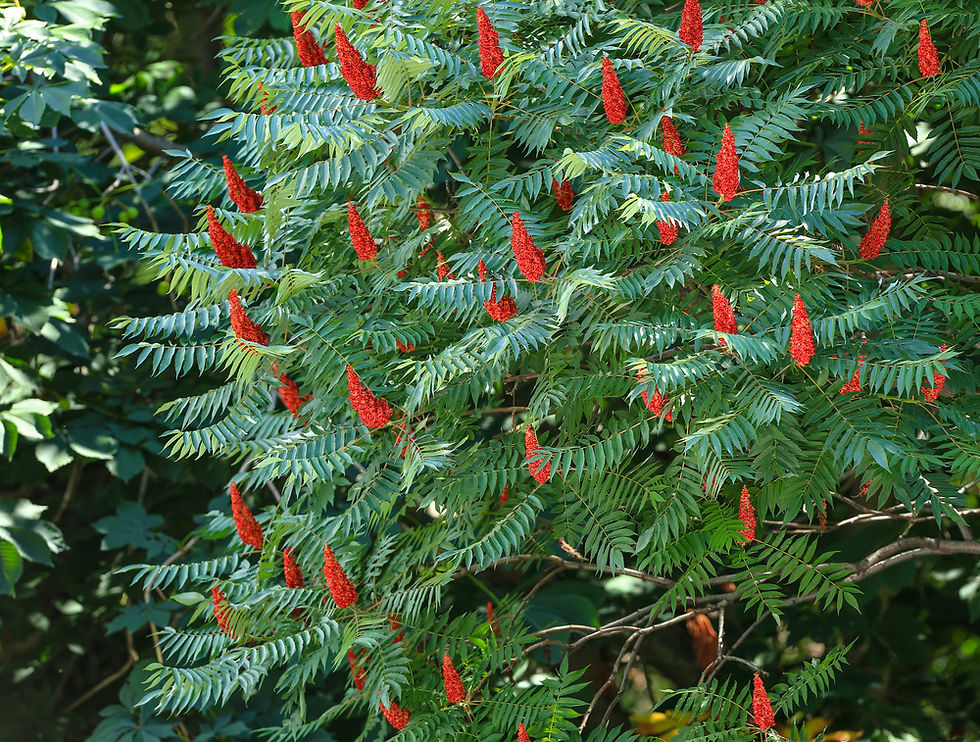
Staghorn Sumac, Rhus typhina, which is native to North America, can be foraged around Melbourne. Staghorn Sumac was traditionally used by Native Americans to flavour soup and drinks, blend with tobacco for smoking, and make into dye and tools. Its most common use was in a zingy drink that served as a reliable way to get vitamin C.

The American Haudenosaunee people tell an ancestral story about a woman whose constant complaining got her banished into the wilderness. The forest spirits weren’t impressed with her either, and turned her into a Staghorn Sumac tree. Her lips became the bright red fruit clusters, forever puckered and sour from all that complaining.
But sour as she is, Sumac is still valued. The story teaches us that those who are difficult still have worth and can be used to serve the community. Very true! I always think each friendship group needs a designated Karen, someone who is gutsy enough to argue for a refund!

Staghorn Sumac is a beautiful tree, with deciduous leaves that turn vibrant red in autumn. The big red fruit clusters are often present all year round, but best harvested in summer using a pair of scissors. Don't harvest if it's been raining, as rain washes off the malic acid coating which gives the fruit its tart flavour.

When I was a kid, we’d dare each other to see who could eat the most Warheads candies, which are also coated in malic acid. They're fiercely sour! You can try licking the Sumac berries if you want a hit of that same childhood candy taste!

Staghorn Sumac's beauty is why it's planted in Australian gardens. It's considered a noxious weed in much of the world, but thankfully has not really invaded Melbourne's natural environment. It can grow in awful quality soil, spread aggressively by sending up new shoots from underground stems (called rhizomes), regenerate after a bushfire, and actually poison the surrounding soil so other plants can't grow! It's a plant that engages in chemical warfare, no wonder it's growing out of control in other parts of the world.

In Melbourne, I've found it in gardens, poking out over the fence, and in a community veggie patch. So how do you ID Staghorn Sumac?

Leaves
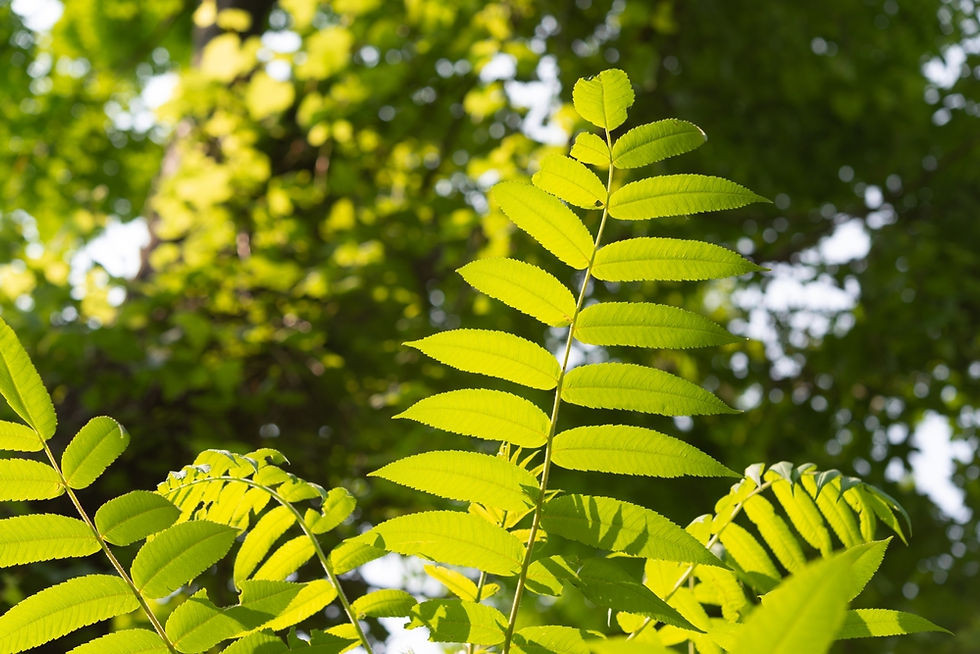
• Arrangement: Each leaf is made up of multiple leaflets (compound leaf), typically growing in opposite pairs.
• Usually 11–31 leaflets with a finely serrated edge.
• Has a terminal leaflet (single leaflet at the tip of the compound leaf).
• Whole leaf is usually 30–60 cm long.
• Green in summer, turning vivid red and orange in autumn.
Fruit
• Only female trees produce fruit. • Dense, upright, cone-shaped clusters at branch tips, made up of many tiny red drupes. • Fuzzy velvet texture. • Smells like lemons and raspberries.

Tree / Shrub
• Deciduous shrub or small tree, growing up to 6 metres tall.
• Spreads by suckers.
• Branches have a distinctive antler-like shape.

Bark & Stems
• Young stems thick and densely hairy (the 'staghorn' feature).
• Older bark grey-brown and smoother.

Flowers (late spring to early summer)
• Tiny yellow-green flowers in upright clusters.
If you’re lucky enough to find some, you could dry it and grind it into a spice, but it’s not as nice as the Middle Eastern variety (Rhus coriaria) used in za’atar, which is hard to find locally. Staghorn Sumac's real calling is in drinks, which makes sense, because that’s how Native Americans enjoyed it. And it's summertime, so hot beach days are just calling for an iced jug of Rhus juice.

Rhus Juice: 4 cone clusters of Staghorn Sumac 2 litres of water
Sugar, optional
Don't wash your Sumac. You'll wash off the flavour. Sure, maybe a bug pooped on it, but you've gotta risk it for the biscuit.
Put your Sumac cones in cold water and mix with a whisk. Refrigerate overnight, whisking whenever you go back into the kitchen.
The next day, strain the mixture through a tea strainer. For a sweeter drink, dissolve a few tablespoons of sugar in a little water (I microwave it, then let it cool). Add this syrup to the strained sumac liquid. Be careful not to heat the berries themselves, as heat draws out bitter tannins.
Done, easy peasy! It tastes a little like strawberry lemonade!

You can also add herbs or fruit to your Rhus Juice to make it pretty. You could try adding thyme, basil, mint, blackberries, raspberries, lemon or orange. Add it to some vodka or tequila for a poolside cocktail. Some people use the Rhus Juice mixture to add to honey to make mead. I've been experimenting with a cheong (equal parts caster sugar and sumac berries left at room temperature), but I'm still mucking around to get good results on that one.

It's a staple for foragers around the globe, and the pink lemonade of the foraging world: sharp, refreshing, and a symbol that sour old ladies make something wonderful.


Comments